Here are some notes on the criteria:
[see above BMP for visual references. unfortunately blogger doesnt accept PDF files - so i had to export as a BMP - click on the image to enlarge.]
# 4.1.1 The Bicycle Design
BUILT IN components:
-GPS to generate real-live web application for smartphones, internet and available at display screens at main stations [this can be used as a planning tool by learning from patterns and therefore being able to plan in a smarter way.]
-accessories: lights, rack, basket, rear lock, solar power
RE-USE abandoned bicycles? 8,000 bicycles were abandoned in 2008 alone. In what way can these be re-used? ... create community-bonding workshops on bicycle mechanics and building workshop using these salvaged bicycles... ? Use the salvaged bicycle parts to reconstruct some of the stations?
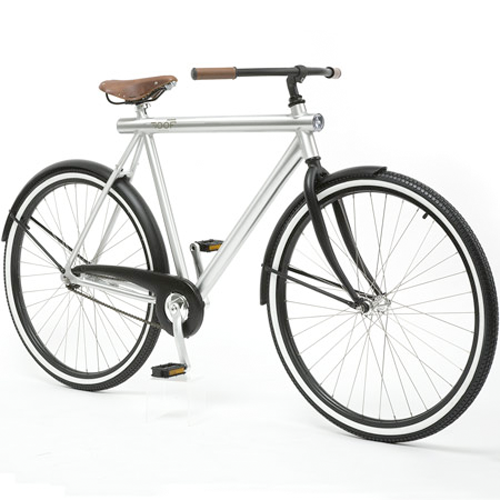
3 types of bicycles, in 2 sizes, for a TOTAL OF 6 types of bicycles.
-townie. 3-speed. [commuter/tourist/copenhagener]
-cargo. [copenhagener]
-salvaged bicycles. [commuter/tourist/copenhagener]
2 sizes:
one to fit 4ft-5ft
one to fit 5ft+
???
# 4.1.2 Storage
Currently there are 34,800 parking spaces, including 1,000 mobile racks.
With the figure of 37% of residents biking to their school or workplace, that means that 150,000 cyclists enter Copenhangen every morning. There is a great need for more parking racks.
Solutions:
-Create more stations for the bike share, and allow for private bicycle owners to use these facilities. Private bicycle owners can tap into this system by paying a minimal yearly fee, which would help generate some revenue for the bike share program.
-Design and implement a modular parking system. These can be available for sale to commercial entities so that they can attract customers. This will create revenue for the bike share program. This type of solution would intelligently solve the issue with privatization of city sidewalks [if one exists, as it does in New York City].
-Utilize the unused wall space for a vertical parking solution.
-Utilize vacant lots for a vertical parking solution.
# 4.1.3 Booking Access and Payment
Commuter: booking and payment can be done online and/or on smartphone. Minimal annual fees for upkeep and maintenance.
Tourist: primarily deals with booking and payment at the physical stations, usually in the main squares. Payment is structured more like a minimal charged rental.
Copenhagener: booking and payment can be done online and/or on smartphone. Minimal annual fees for upkeep and maintenance.
Research other cities’ booking access and payment programs.
Paris, Lyon, Barcelona, Beijing, etc
How to generate revenue to maintain the bike share:
-modular bike racks [private commercial businesses]
-advertisement ‘space’ on bicycles and station kiosks and shelters
# 4.2.1 Overall Design Concept
Bicycle share name... ?
"If it’s monuments you’re after in Copenhagen, don’t look up. Look all around you, right there at street level. Our greatest monument is motion. It is a massive, constant, rhythmic and life-sized legacy."
free form
immediacey
dynamic
inter-connectivity
decentralized
real time
scale- micro macro
interplay
urbanity
inter reactionary
trifecta
A physical infrastructure is integral in a successful bike share [bicycles, racks, pick-up/drop off stations, bike tracks/lanes, etc]. In this proposal, a digital infrastructure is also integral in the success of the bike share [GPS on the bicycles, GIS application - Google mashup -, text messaging, etc].
GPS to generate real-live web application for smartphones, internet and available at display screens at main stations.
# 4.2.2 Design and Form
Copenhagen blue [bike lane]
Utilize a strong branding identity. [Historic emblems, color] BOLD, SYMBOLIC.
One way to think about using the city symbol: Create the station, and on the shelter, enlarge the logo so it becomes more of an abstraction.
Propose stages for implementation:
Once these stages have been created, the program can advance to a further state depending on
demand/need, as seen fit by the City.
Stage 1 - X amount of bicycles, X amount of parking spaces, X amount of stations, etc.
Stage 2 - As the program is deemed successful and there is more demand, increase in amount of bicycles, parking spaces, stations, etc.
Stage 3 - As the program expands, increase... and institute more solutions for the increase of bicycles and space for storage - use empty walls for a vertical solution; use vacant lots, etc.
Each stage becomes increasingly more complex in terms of increase of fleet, increase in parking, etc - general increase in the infrastructure.
# 4.2.3 Visibility User Friendliness and Logistics
Utilize a strong branding identity. [Historic emblems, color] BOLD, SYMBOLIC.
Utilize lighting system. Look to the symbolism in the NYC Transit system’s lighting - the glow of the Green orb when a station is open. Use the same soft, glowing but vibrant and intense type of light at the bike share stations. The stations’ level of illumination corresponds with the stations’ bicycle availability.
# 4.2.4 Interaction with the City
With growing popularity of cycling and the implementation of the new bike share, cycle track congestion proves as a challenge for city planners.
Prime motive for cycling: more and wider cycle tracks and fewer cars.
2015 GOALS:
- 50% of people will go to their work place or educational institution in Copenhagen by bike. [In 2008 , 37%]
- The number of seriously injured cyclists in Copenhagen to be halved compared to today. [118 cyclists]
- At least 80% of cyclists in Copenhagen to feel safe and secure in traffic [58%]
quick idea of how we can represent our 3 personas: